
 Tiếng Việt
 日本語
日本語Vietnam’s current export garment standards
Enterprises producing and trading garments need to export large batches of goods to international markets but do not clearly understand the standards and criteria for evaluating products of export quality?
In this article, Kim Sora will share with customers about Vietnam’s current export garment standards. At the same time, we also point out our own strengths in price, reputation, product quality and the certificates that Kim Sora has achieved to meet international export requirements.
What is the production and export situation of Vietnam’s textile and garment industry?
In our country today, the textile industry is increasingly playing a key role in the national economy. It not only serves the increasingly high, rich and diverse needs of people but is also a profession that helps Vietnam ensure jobs for many people in society and contribute more and more to the national budget. national policy, creating conditions to promote the economy to gradually develop in the most positive and positive direction.

In recent years, the textile industry has made great strides. The industry’s average growth rate is about 30%/year, in the export sector the average growth rate is 24.8%/year and accounts for 20% of the country’s total export turnover.
Up to now, the whole country has about 822 textile and garment enterprises, of which 231 are state-owned enterprises, 370 are non-state-owned enterprises and 221 are foreign-invested enterprises.
Vietnam’s largest textile and garment export, accounting for about 34%-38% of Vietnam’s total annual export turnover.
Textile and garment products exported to Japan have enjoyed preferential tax rates under the GSP system, so textile and garment export turnover to this market has increased quite rapidly in recent years, the country’s market share of woven and knitted goods. in Japan’s textile and garment market are 3.6% and 2.3% respectively, export turnover accounts for about 30% of textile products.
Standards for evaluating and inspecting Vietnam’s garment exports to other countries
1. Basic shape, model and size requirements
Shape: The shape of the clothing must match the design style and have good aesthetics. For multi-layer clothing, the internal shape must also be consistent with the product design.
Basic models and sizes:
Popular clothes are produced according to the exact models and sizes specified in standards at all levels or contracts.
Allowable deviations in size for clothes with 2 or more layers
Technical requirements
Requirements and standards for exported garments for raw materials and accessories:
Main fabric: Fabric must ensure good quality, have mechanical – physical – chemical criteria in accordance with regulations in standards at all levels or according to standard samples signed in the contract.
Construction fabric: Adhesive construction fabric or non-adhesive construction fabric must have color, shrinkage and thickness consistent with the color, shrinkage and thickness of the main fabric.
Lining fabric: The body lining fabric must have a color suitable for the main fabric and have appropriate physical and chemical properties so as not to affect the size and style during product use. The lining fabric in other positions may have a different color than the fabric, but still meets the requirements of matching the main fabric.
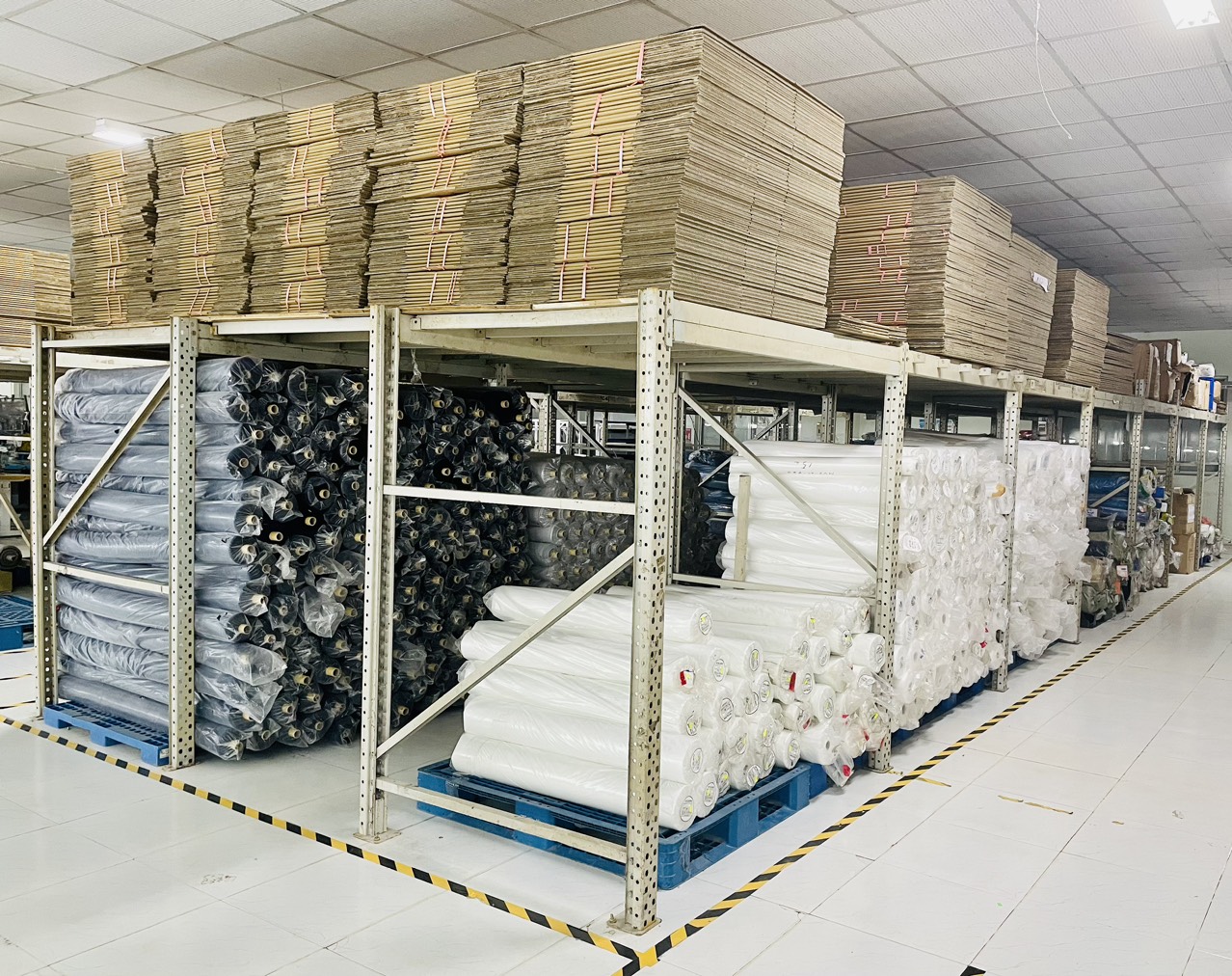
Decorative materials, threads, buttons, stickers, zippers, labels,…: must achieve the aesthetics and design intent of the garment, high durability, good quality, and appropriate size or according to the contract.
3. Requirements on labeling, packaging and preservation of goods
Labeling and packaging:
The requirement to export garments to China, the EU, etc. is that each product must have a woven or printed label with the following content: size number, production unit symbol, name of exporting country, and instructions for use. Label content can be recorded according to the agreement in the contract.
In addition to the woven or printed label, there can be an additional cardboard label that states: product type, material composition, color, size, quality, name and address of the manufacturing facility.
Woven or printed letters on labels must be clear and straight.
The product must be folded and balanced, pinned and clamped according to regulations.
Each product is contained in a PE, PP bag or according to other customer requirements.
The number of sizes and colors of products contained in a box and the number of boxes in a box are according to standards at all levels or according to the contract.
Each box must have a packing slip affixed to the top corner of the box. The content of the slip is as follows: Product code + Quantity + Product name and specifications + Weight both wrapped and unwrapped + Date, month, year of packaging. The outside of the box must be securely braced to ensure safety during transportation.
The outside of each box must be clearly marked with the following content: Name and address of the exporting facility + Name and address of the importing facility + Receiving address + Contract number and shipment number + Model and order number Order of goods in batch + Weight of both tare and untare + Preservation code.
KIM SORA exports garments internationally
Kim So’s garments to meet requirements and standards for export to international markets such as the US, Japan… product quality processes according to Japanese standards.
Commitment to quality is always the top priority, responding promptly and quickly, exceeding customers’ expectations, with a team of professional, dynamic, creative staff and advanced machinery systems. up.
We strive to become the leading garment manufacturing company in the country with high quality and competitive prices.
In addition, Kim Sora achieved a WRAP rating, demonstrating the factory’s compliance with social responsibility and quality management standards.
————
Please contact Kim Sora immediately for advice and orders today -> text now
Email: sales@kimsora.com.vn
Hotline: 0905 986 797
WRAP Certification – Passport for Textile and Garment Enterprises in the Time of Integration
In the article below we will provide some information about the world’s largest independent certification program focusing on the field of apparel, footwear and sewing products (WRAP).
1. What is WRAP?
WRAP stands for Worldwide Responsible Accredited Production – the name of the organization that recognizes social responsibility in global production, focusing on the fields of apparel, footwear and apparel products.
The WRAP program evaluates compliance with WRAP’s 12 principles to ensure safe, legal and ethical manufacturing processes.
Include:
Comply with applicable laws and regulations
Prohibit the use of forced labor
Prohibit the use of child labor
Harassment and abuse are prohibited
Salary and benefits
Work time
Discrimination is prohibited
Occupational safety and hygiene
Freedom of association and collective bargaining
Environment
Comply with tariff regulations
Security
2. Benefits of Applying for WRAP Certification and Being Certified:
WRAP certification will help factories improve their reputation and build trust among workers, customers, partners and other interested parties.
WRAP certification will affirm the commitment of the top leadership of the unit and organization to apply, maintain and regularly improve the occupational health and safety management system of workers to ensure Workers have the right to work in a safe environment, ensuring necessary and health conditions to improve the quality of work to meet requirements.
WRAP certification is evidence that helps an organization meet the legal requirements for responsibility requirements with production workers, who are low status and vulnerable in society, protected.
Manufacturers that obtain WRAP certification will help enhance their image, corporate culture and brand.
Improve product and service competitiveness as a condition for providing. Many businesses that receive WRAP training will work more productively and bring greater efficiency.
WRAP certification is a passport for goods that can be exported to European regions: USA, UK…. And developed countries prioritize human rights first
3. Three levels of WRAP certification:
There are three levels of WRAP certification – Platinum, Gold and Silver.
Certification is issued to a facility as determined by WRAP and depends on the extent to which an audit demonstrates full compliance and management commitment to the WRAP Principles.
Platinum
Platinum certification is awarded to facilities that have demonstrated full compliance with WRAP’s 12 Principles in three consecutive certification audits. Platinum facilities must successfully pass every audit without corrective action or observation and maintain continuous certification with no gaps between certification periods. Certification is valid for 2 years.
Yellow
Gold certification is the standard level of WRAP certification, awarded to facilities that demonstrate full compliance with WRAP’s 12 Principles. Certification is valid for 1 year.
Silver
WRAP may issue, or a facility may request, a Silver certificate if an audit finds it in substantial compliance with WRAP’s 12 Principles, but identifies minor non-compliances in policies, procedures or training must be addressed. Certification is valid for 6 months.
4. Kim Sora was honored to receive WRAP Certification
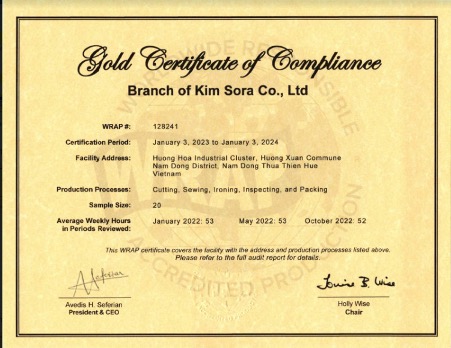
To meet export requirements to major markets around the world such as the US, Europe, etc. Kim Sora has made great efforts to achieve WRAP certification, demonstrating compliance with social responsibility and management standards. quality of Kim Sora factory.
Kim Sora’s garment products are produced according to a closed process and quality management according to Japanese standards, ensuring that all products have the same quality. As a manufacturer operating in the international market, the main export markets are Japan, Taiwan, Korea, Switzerland, America…. we hope to bring consumers products that meet standards. Quality standards according to “Japanese standards – European style – Affordable prices”.
Please contact Kim Sora immediately for advice and to order today. Email: sales@kimsora.com.vn
Kim Sora: produces garments, cooperates with international brands, provides garment processing for export. In the article below, we would like to introduce more about the company’s garment sector.
What is export garment processing service?
Export garment processing service is a method of producing export garments.
Typically, nowadays garments are often produced according to CMT (cut-make-trim) services, purchasing semi-finished raw materials (FOB),…
Depending on the type of service the garment is produced in, you will know what the outsourcing party provides and what the processing party must do.
The ordering party can provide: machinery, equipment, raw materials or semi-finished products according to given samples and norms.
The outsourcing party organizes the product manufacturing process according to customer requirements.
All products made by the processing party will be returned to the ordering party to receive wages (processing fees) according to the contract (or paid in materials or other services).

Processing activities are carried out through contracts (processing contracts) with specific regulations on quantity, quality, price and completion time, and compensation liability when the contractor allows loss or damage to occur. Damaged or poor quality goods, etc.
International processing services today are a quite popular transaction method in international trade of many countries. For the ordering party, this method helps them take advantage of the low prices of raw materials and labor in the receiving country. For the outsourcing party, this method helps them solve the problem of employment for domestic workers and can receive new equipment or technology, helping them somewhat in the process of building their industry. nation.
Kim Sora’s garment processing products for export
Whether in fashion garments or specialized garments that meet special functional requirements, the variety of fabrics and sewing styles is endless. Our sewing thread product lines keep up with all those needs: from luxury apparel to comfortable clothes. To create a product that brings elegance and sophistication, the craftsman’s skills must be precise; Wearing comfort requires good compatibility of materials. At Kim Sora we ensure that our thread product lines meet the highest standards of quality, durability and color accuracy, as well as environmental friendliness, and are also suitable for almost all fabrics and sewing techniques.
We always provide customers with the best products at reasonable prices, updating domestic and world fashion trends, including:
Labor protection clothing
Medical clothing
Fashionable outfits
With a product quality process according to Japanese standards, commitment to quality is always the top priority, responding promptly and quickly, exceeding customers’ expectations, with a team of professional staff. Professional, dynamic, creative and with advanced machinery systems.
Significantly to meet export requirements to major markets in the world such as the US, Europe, etc. Kim Sora has strived to achieve WRAP rating, demonstrating compliance with social responsibility and management standards. Quality management of Kim Sora factory.
—
Please contact Kim Sora immediately for advice and order today via Fanpage & Zalo
LEARN MEDICAL MASKS THAT MEET JAPANESE STANDARDS JIS T 9001: BPV>99 – TOP QUALITY STANDARDS
Japan is one of the leading countries in many fields, especially industry. Japan’s set of industrial standards is also extremely strict and prestigious in the world, ensuring the highest product quality. That’s why products that meet Japanese standards are always trusted.
Japanese medical masks that meet JIS T 9001 standards are manufactured and packaged according to Japan’s top quality standards, ensuring safety and effectiveness in preventing the spread of infectious diseases.
Kim Sora is proud to bring customers medical mask products that meet Japanese production standards JIS T 9001 and serve the Japanese market.
Let’s find out in detail with Kim Sora what a medical mask that meets Japanese standard JIS T 9001 is.
What is Japan’s JIS T 9001 standard?
JIS standards are Japanese industrial standards, abbreviated from Japanese Industrial Standards. This is the standard system applied to all Japanese industrial activities. The procedures of this standard were developed by the Japan Industrial Standards Committee and issued by the Japan Standards Federation.
The scope of JIS’s participation is very diverse, from heavy industry to light industry, especially the field of steel, stainless steel and other production materials. In addition, household products such as soap and detergent also have their own JIS standard evaluation system.
JIS T standards are used in the medical device industry and safety applications.
Why should you use JIS T 9001 Medical Mask – Medical mask that meets Japanese quality standards.
JIS T 9001 medical mask ensures safety and effectiveness in preventing the spread of infectious diseases. Manufactured and packaged according to Japan’s top quality standards, the JIS T 9001 medical mask uses safe materials, does not irritate the skin and ensures good filtration and antibacterial properties.
Furthermore, the JIS T 9001 medical mask has the ability to filter dust and microscopic dust particles such as PM2.5, dust, and air pollution, helping to protect your health in polluted environments.

Kim Sora medical masks meet high quality standards
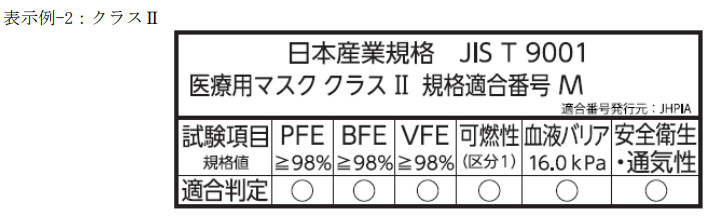
According to JIS T 9001 standards, to be assessed as meeting Japanese export medical mask standards, there must be a rigorous combination of many different criteria such as:
BFE (Bacterial Filtration Efficiency): Bacterial filtration efficiency
PFE (Particle Filtration Efficiency): particle filtration efficiency with a test particle size of 0.1 micrometers
VFE (Viral Filtration Efficiency): viral filtration efficiency
Along with three other test criteria:
Flammability: test the flammability of product materials
Blood barrier: blood barrier
Healthy and safety-breathabitity: safety and health criteria – product breathability.
Because of the rigor in evaluating such testing criteria, when buying Japanese medical masks – masks meeting JIS T 9001 standards, you can be assured of their ability to prevent the spread of infectious diseases. , protect the health of yourself and others.
Kim Sora medical masks are proud to meet Japanese export medical mask standards according to JIS T 9001 Class II standards, are popular with the Japanese market and are a supplier of JIS T 9001 medical masks in Vietnam. Male.
Currently, Kim Sora medical masks have been distributed nationwide. Please contact us to buy genuine products at the most preferential prices.